

The workers were nice and professional. The wait was short. The only problem I had is because it is very far from where I live. I wish there was one that was closer.
Read More
How Far Ahead Do You Need Travel Vaccines?
Posted: Sep 8th, 2026 at 12:00AM
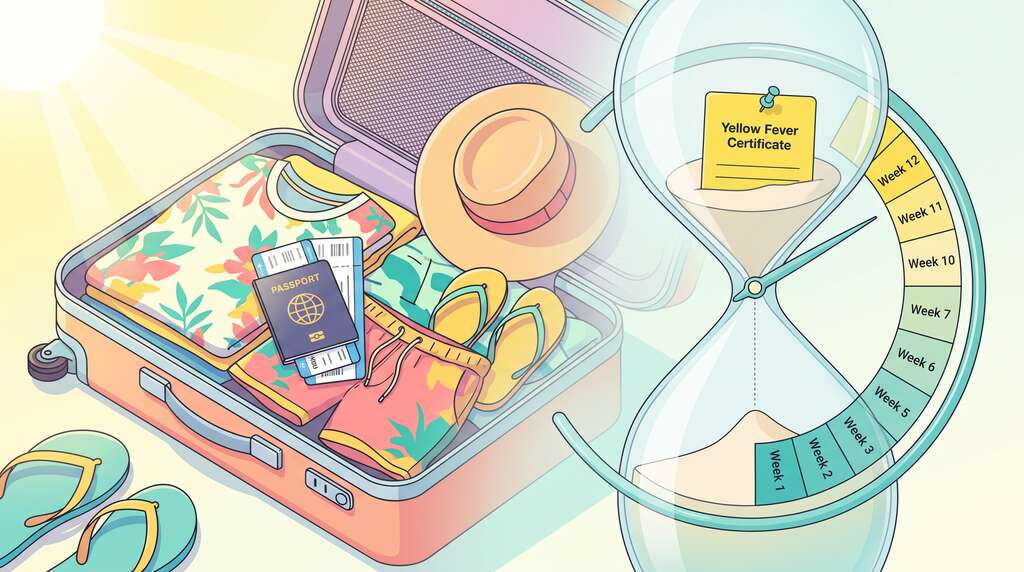
Most people book the flight, book the hotel, and think about vaccines somewhere around week three of packing anxiety. That order works fine for almost every trip detail except this one, because several travel vaccines take weeks to work — and one of them can get you turned away at a border.
The short answer: see a travel medicine provider at least four to six weeks before departure. If your itinerary is complex or you may need a multi-dose series, make it eight to twelve weeks.
Here is what actually drives that timeline.
Yellow Fever Is the One With a Hard Deadline
Every other vaccine on this list is a health recommendation. Yellow fever is a border requirement, and the timing is not flexible.
The vaccine must be given at least ten days before you arrive in a country that requires it. That ten-day window is written into the International Health Regulations, not offered as advice. If you are vaccinated nine days before arrival, your certificate is not yet valid. Travelers who show up without a valid certificate can be denied boarding, refused entry, or held in quarantine.
Two more things people learn too late. First, the proof has to be an official International Certificate of Vaccination or Prophylaxis — the yellow card — issued by an authorized yellow fever vaccination center. A note from your regular doctor will not be accepted. Not every clinic is authorized to issue one. Second, requirements can apply based on transit, not just destination: some countries require the certificate if you have merely passed through a risk area en route.
The good news is that the rules got simpler in one respect. A single dose is now considered to provide long-lasting protection adequate for most travelers, and the certificate is valid for life. The old ten-year booster requirement was eliminated in 2016. If you were vaccinated years ago and still have your yellow card, dig it out before assuming you need another dose.
The Vaccines That Need the Most Lead Time
These are multi-dose series. If any apply to your trip, four weeks is usually not enough time to complete the series.
- Hepatitis B. The standard series is three doses given over roughly six months. Accelerated schedules exist for travelers with less lead time, so this is not a reason to skip the conversation — but it is the vaccine most worth starting early.
- Japanese encephalitis. Two doses given twenty-eight days apart, with the series completed at least one week before travel. An accelerated schedule of days zero and seven is approved for adults, which compresses the timeline considerably. Relevant for rural and rice-growing areas of Asia during transmission season.
- Rabies pre-exposure. Worth knowing: ACIP revised this in 2022 to a two-dose regimen given on days zero and seven, replacing the older three-dose schedule. Many sources online still describe the old version. Travelers with sustained long-term risk may need a titer check or a third dose within three years.
The Ones That Work on Shorter Notice
Even if your trip is sooner than you would like, there’s still time to get the travel vaccines you need.
- Hepatitis A. Protection develops relatively quickly, with good protection after about two weeks. A second dose six to twelve months later provides long-term coverage, but the first dose does the work for your trip.
- Typhoid. The injectable version needs about two weeks to take effect and lasts two years. The oral version is four capsules taken on alternating days, completed at least a week before exposure, and lasts five years.
- Malaria prevention. Not a vaccine — prescription prophylaxis. Some options can be started only one to two days before departure, which makes malaria one of the easier items to handle late. Which drug is appropriate depends on your destination, your health history, and how long you will be there.
- Altitude illness prevention. Travelers planning mountain-climbing activities or stays at high elevations may benefit from being prepared with medication to help prevent or treat altitude-related illnesses such as AMS, HACE, and HAPE. Like malaria, prevention can often be started as soon as one to two days before departure.
Don't Overlook the Routine Vaccines
Travelers focus on the exotic ones and skip the obvious. In practice, the vaccines most likely to matter are the ones you were supposed to already have.
Measles circulates in many parts of the world and has resurged in several regions, including destinations most Americans consider low-risk. Tdap boosters lapse quietly every ten years. Some countries have polio booster requirements for departing travelers under current international health recommendations. Seasonal influenza is worth considering regardless of destination, since flu season in the southern hemisphere runs opposite to ours, and transmission can even occur year-round in certain tropical regions.
A travel consultation should review your routine immunization status alongside destination-specific recommendations. If it does not, you are only getting half the picture.
What If You're Leaving in Ten Days?
Go to the appointment anyway. This is the single most useful thing in this article.
Partial protection is meaningfully better than none. Hepatitis A still helps. Injectable typhoid still helps. Malaria prophylaxis can start days before departure. Accelerated schedules exist for several vaccines specifically for this situation. And a provider can give you destination-specific guidance on food and water precautions, insect protection, and what to do if you get sick abroad — advice that costs nothing and works immediately.
The only genuinely fixed constraint is yellow fever's ten-day rule. Everything else has options.
What to Bring to a Travel Consultation
- Your full itinerary, including layovers and any side trips — rural areas and transit countries change the recommendations
- Your travel dates and how long you will be in each place
- Your immunization records, including any old yellow fever certificate
- A list of current medications and any chronic conditions
- Whether you will be doing anything higher-risk: extended rural stays, working with animals, medical volunteering, adventure travel
Plan Your Trip's Health Requirements in Las Vegas
e7 Health has provided travel medicine to Las Vegas travelers for over two decades. Our travel physicians and nurse practitioners review your specific itinerary, recommend the vaccines and prescriptions you actually need, and provide guidance on food, water, insect, and safety precautions for your destinations. We stock every vaccine available in the United States, so you are not sent elsewhere to complete your series.
Book as early as you can — and if your trip is close, call anyway. Same-day and next-day appointments are available.
This article is provided for general informational purposes and is not medical advice. Vaccine recommendations and entry requirements vary by destination and change frequently. Consult a travel medicine provider and check current requirements at cdc.gov/travel before your trip.

(Translated by Google) This is the best clinic I've ever visited. I went for some work-related tests and they treated me with so much kindness and respect. They have a fantastic team. Google won't let me leave a second review. I went a second time and they treated me just as well as always, with great kindness and professionalism. They make everything easy for you at our clinic, and they have a fantastic staff. Ms. Fernanda was a true professional. Thank you to all the doctors for making things so easy for us. (Original) Esta es la mejor clínica que he visitado. Fui hacerme un exámenes para mi trabajo y me atendieron con mucho amor y respeto, tienen un equipo de trabajo fantástico, google no me deja hacer una segunda reseña. Fui por segunda vez y me atendieron igual que siempre aquí con muchas amabilidad y profesionalismo a nuestra clínica porque esto te lo hacen fácil además de eso no tienen un gran personal profesional . La señorita Fernanda fue una gran profesional en su atención. Gracias a TODOS LOS DOCTORES POR HACERNOS LAS COSAS FACILES
Read More
Clean & professional
Read More